
UK Vape Tax 2026: How Much More Will You Pay?
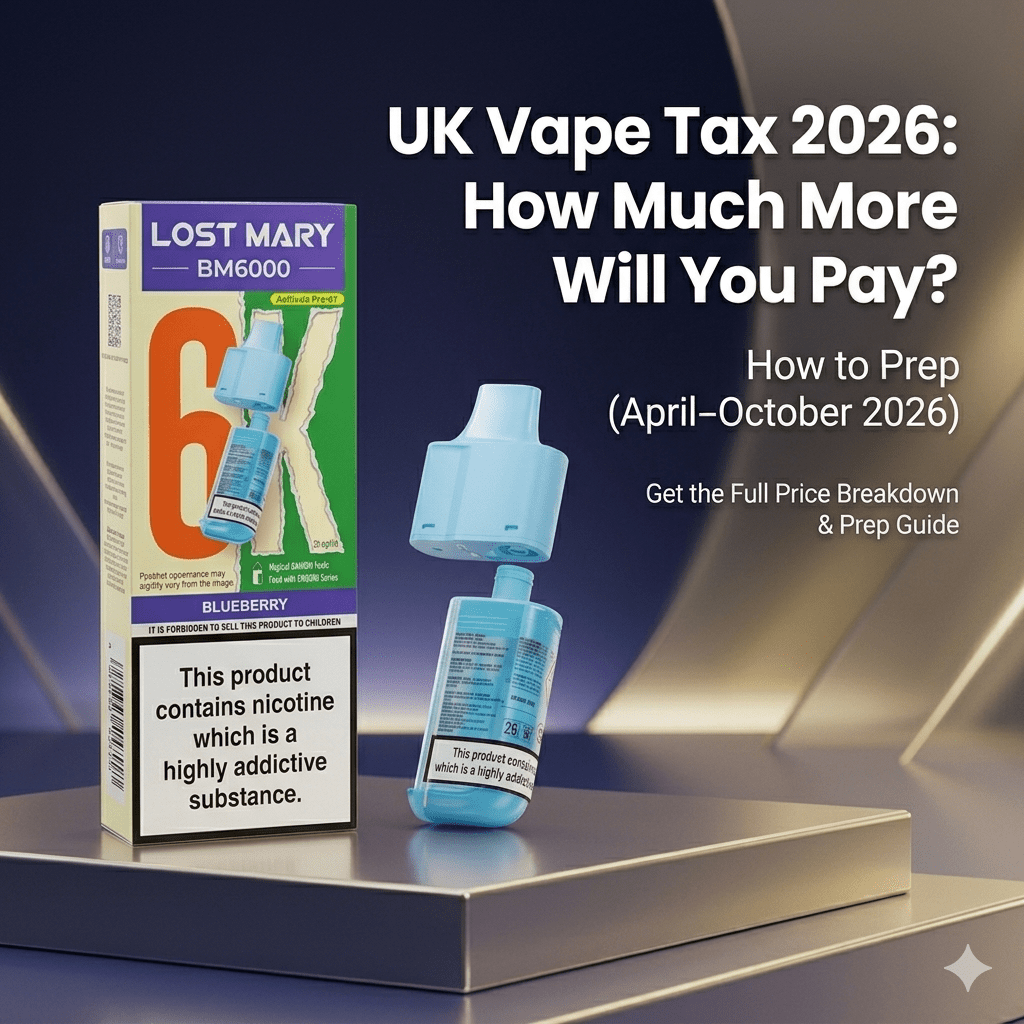
The New Reality for UK Vapers
As of April 2026, the "Vaping Products Duty" is no longer a distant proposal—it is a logistical reality. HMRC has officially opened registration for the Vaping Duty Stamps (VDS) Scheme, and manufacturers are currently retooling their production lines to accommodate the new tax labels.
For years, vaping has been the "affordable" alternative to the skyrocketing costs of tobacco. But starting October 1, 2026, the financial landscape shifts permanently. Unlike previous suggestions of a tiered system, the government has finalized a flat-rate tax that hits every milliliter of e-liquid equally. Whether you are a beginner using pre-filled pods or a professional hobbyist mixing high-VG shortfills, your monthly budget is about to be recalculated.
We understand the frustration. You made the switch to improve your health and save money, and now it feels like you're being penalized for it. This guide isn't here to sell you hardware; it’s here to provide a clear, expert-driven roadmap of exactly what is changing, why the "flat-rate" model was chosen, and how you can navigate the new costs starting this autumn.
What Is the UK Vape Tax 2026?
The Vaping Products Duty (VPD) is a new excise tax targeting all vaping liquids manufactured in or imported into the UK. Historically, vapes were only subject to standard 20% VAT. Under the new legislation confirmed in the recent budget, a specific levy is applied directly to the liquid volume.
The Official Rate
The UK has officially set a flat rate of £2.20 per 10ml of e-liquid.
This is a critical update: earlier proposals for "tiered" pricing (where lower nicotine meant lower tax) have been scrapped. In 2026, all e-liquid—including nicotine-free (0mg) shortfills and nicotine shots—will be taxed at the same rate.
Important Implementation Dates:
· April 1, 2026: Businesses can officially apply for HMRC approval and the Duty Stamp scheme.
· October 1, 2026: The tax becomes legally due on all production and imports.
· April 1, 2027: The end of the "sell-through" period. No unstamped stock can be sold after this date.
The 2026 "Flat-Rate" Breakdown: How Much More?
Because the tax is applied at the production stage, VAT is then added to the taxed price. This creates a compounding effect that adds roughly £2.64 to every 10ml bottle.
|
Product Category |
Current Price (Avg) |
2026 Estimated Price |
Total Tax Impact |
|
10ml Nic Salt / Freebase |
£3.99 |
£6.63 |
+ £2.64 |
|
10ml Nicotine Shot |
£1.00 |
£3.64 |
+ £2.64 |
|
50ml Shortfill (0mg) |
£10.00 |
£23.20 |
+ £13.20 |
|
100ml Shortfill (0mg) |
£15.00 |
£41.40 |
+ £26.40 |
|
2ml Pre-filled Pods (2pk) |
£5.99 |
£7.05 |
+ £1.06 |
Expert Insight: Sub-ohm vapers using 100ml bottles will feel the heaviest burden. A single 100ml bottle will attract £22.00 in duty, plus an additional £4.40 in VAT on that duty.
Key Features: HMRC Duty Stamps
To combat the black market, the UK is mirroring the tobacco industry with a Vaping Duty Stamp (VDS) Scheme.
1. Physical Proof of Tax
Every bottle, pod, or pre-filled device sold after October 2026 must carry a physical HMRC stamp. This stamp proves the excise duty has been paid.
2. The 6-Month "Sell-Through" Grace Period
Retailers are allowed to sell old, unstamped stock produced before October 1, 2026, until March 31, 2027. This means savvy buyers can still find "pre-tax" prices for a few months if shops have surplus inventory.
3. Traceability and Enforcement
The stamps include security features to ensure products are legitimate. Selling unstamped liquid after April 2027 will carry heavy fines and potential criminal charges for retailers.
Why the Government Chose Volume over Nicotine
The shift from a "tiered" nicotine tax to a "flat" volume tax was a strategic move by the Treasury for three main reasons:
· Enforcement Simplicity: It is much easier for HMRC to measure 10ml of liquid than to chemically verify if a liquid is 3mg, 6mg, or 12mg nicotine.
· Closing the Shortfill Loophole: Previously, vapers could buy 100ml of 0mg juice (tax-free) and add a tiny nicotine shot. By taxing 0mg liquid at £2.20 per 10ml, the government ensures no one bypasses the duty.
· Youth Prevention: Higher prices across the board are intended to remove the "pocket money" appeal for minors, regardless of whether the product contains nicotine or not.
Types of Vaping and Their New Costs
Pod Systems (Pre-filled & Refillable)
This is the most cost-effective way to vape in 2026. Because MTL (Mouth-to-Lung) devices use very little liquid (roughly 2ml–3ml per day), the daily tax increase is only about 50p–80p.
· Best for: Budget-conscious users.
Sub-Ohm (High Wattage)
If you "cloud chase" and go through 100ml a week, your monthly costs will increase by over £100.
· Cost Perspective: The cost of 100ml of liquid will more than double overnight.
Disposable Vapes
Note: As of June 1, 2025, single-use disposables are banned in the UK. Any "big puff" devices remaining on the market that are rechargeable/refillable will still be subject to the £2.20 per 10ml tax based on their total internal capacity.
Buyer Framework: How to Prep (April–October 2026)
With the tax deadline approaching, here is how a "Professional" buyer should handle the next six months:
1. Switch to High-Efficiency Hardware: Move from 80W sub-ohm tanks to 12W–15W pod kits. You will use 70% less liquid while getting the same nicotine satisfaction.
2. Audit Your Monthly ML: Calculate your weekly liquid consumption. If you use 50ml a week, your annual cost will rise by £686.40.
3. Strategic Stockpiling: E-liquid generally has a shelf life of 2 years. Buying your preferred shortfills in August/September 2026 could save you hundreds of pounds.
4. Avoid the "Nic-Shot" Trap: Nicotine shots are 10ml bottles. They will cost £3.50+ each in 2026. Consider switching to pre-mixed 10ml bottles if the price of DIY becomes too high.
5. Check for HMRC Stamps: After October, only buy products with the official stamp to ensure you aren't purchasing dangerous, unregulated "home-brew" liquids.
Internal & External Linking Strategy
Internal Links
· Anchor text: "best MTL pod kits for 2026" → Link to: Top 10 Efficiency Devices.
· Anchor text: "e-liquid storage guide" → Link to: How to keep your stockpile fresh.
· Anchor text: "vape tax calculator" → Link to: Interactive price tool.
External Links
· GOV.UK: The official "Vaping Products Duty" guidance for businesses.
· HMRC: Information on the Vaping Duty Stamps Scheme.
· ASH (Action on Smoking and Health): Reports on the 2026 price gap between tobacco and vapes.
FAQ: Everything You Need to Know
1. How much is vape tax going up?
It is a flat £2.20 per 10ml. When you include the extra 20% VAT that applies to the tax itself, the total shelf-price increase is £2.64 per 10ml.
2. Does the tax apply to 0mg (nicotine-free) juice?
Yes. The 2026 tax applies to all vaping liquids regardless of nicotine content.
3. Will hardware (coils, pods, kits) be taxed?
No. The VPD only applies to the liquid. Empty pods and devices remain subject only to standard VAT.
4. Can I still buy 100ml shortfills?
Yes, but they will be significantly more expensive. A £15 bottle will cost roughly £41.40.
5. Why is there a duty stamp on my bottle?
The stamp is a legal requirement as of October 2026 to prove the tax has been paid to HMRC.
6. Will vaping still be cheaper than smoking?
Yes. To maintain a "price gap," the government increased tobacco tax by £2.20 per 100 cigarettes simultaneously. Vaping remains roughly 3x cheaper than a cigarette habit.
7. What happens if I buy liquid without a stamp?
After April 1, 2027, it is illegal for a UK shop to sell unstamped liquid. Such products are likely unregulated and potentially unsafe.
Final Verdict: Is Vaping Still Worth It?
The 2026 UK Vape Tax is the end of "cheap" high-volume vaping. If you are a sub-ohm vaper, your costs are about to rival a smoking habit unless you adapt. However, for most users of refillable pod kits, the increase is manageable—roughly the cost of one extra coffee per week.
Who should buy now?
Anyone using shortfills or nic salts should consider building a 6-month "buffer" of stock before the October deadline.
Who should switch?
If you are still using high-power devices, now is the time to transition to a more efficient MTL setup to minimize your "tax footprint" for the years ahead.