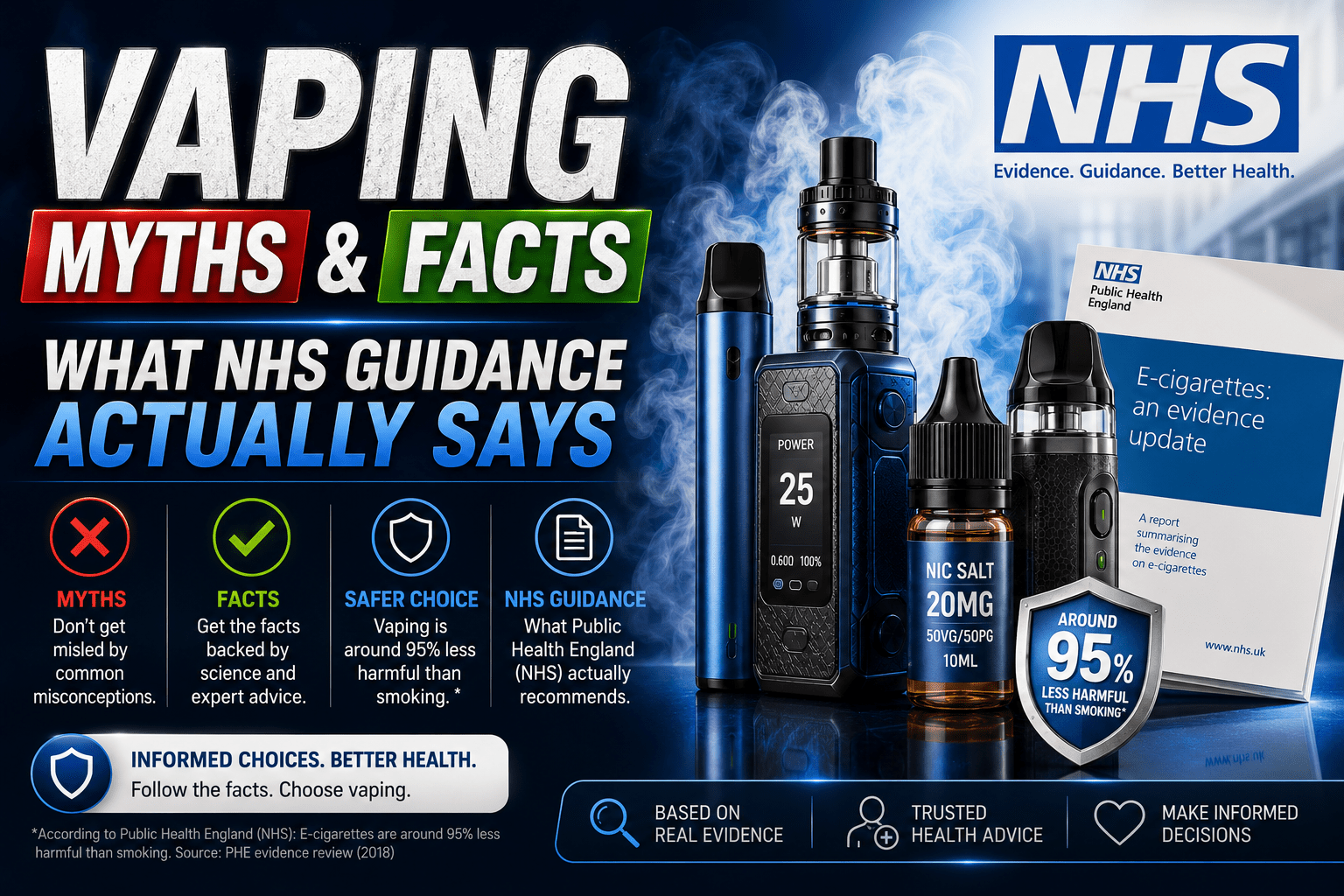
Vaping Myths and Facts: What NHS Guidance Actually Says
Vape shop staff field the same handful of customer questions on repeat — is vaping actually safer than smoking? Is nicotine itself dangerous? Does vaping cause "popcorn lung"? There's a lot of conflicting information out there, so this post breaks down eight of the most common vaping myths against the facts, based on official NHS Better Health guidance, to help retailers answer confidently and accurately.
This article summarises general public health guidance for information purposes. It is not medical advice — anyone with health concerns about vaping or quitting smoking should speak to their GP, pharmacist or local Stop Smoking Service.
Table of Contents
Myth: Vaping Is Just as Harmful as Smoking
Fact: According to NHS Better Health, vaping is not risk-free, but it carries only a fraction of the risk of smoking. Cigarettes burn tobacco and release thousands of chemicals, dozens of which are known to cause cancer — most of these harmful substances simply aren't present in vape aerosol. People who switch completely from smoking to vaping significantly reduce their exposure to the toxins linked to cancer, lung disease, heart disease and stroke.
Myth: Nicotine Itself Is Dangerous
Fact: Nicotine is highly addictive, but on its own it isn't what makes smoking so harmful. The NHS is clear that it's the other toxic chemicals in cigarette smoke — like tar — that cause almost all of smoking's health damage, not the nicotine itself. Nicotine has long been used safely in licensed products such as nicotine replacement therapy.
Myth: Vaping Doesn't Really Help People Quit Smoking
Fact: NHS guidance states nicotine vapes are among the most effective stop-smoking tools available, outperforming traditional nicotine replacement therapies like patches or gum in evidence reviews. Part of the reason is behavioural — the hand-to-mouth action and throat sensation mimic smoking closely enough to ease the transition. Choosing the right nicotine strength matters here, which is why a good nic salt range with a spread of strengths helps shop staff match a device to a customer's previous smoking habits.
Myth: You're Just Swapping One Addiction for Another
Fact: Vaping and smoking both deliver nicotine, but the way they do it matters. Smoking burns tobacco to release nicotine along with a long list of harmful toxins; vaping heats an e-liquid, exposing users to far fewer toxins at much lower levels. Many people also use vaping as a step-down tool, gradually reducing nicotine strength over time until they're nicotine-free.
Myth: Vaping More Often Than You Smoked Is a Bad Sign
Fact: This is one of the more common misunderstandings. Vaping delivers nicotine differently to smoking — more gradually — so it's normal to "sip" on a vape more frequently than you'd smoke a cigarette, and this isn't a sign of increased harm. A single puff on a vape carries only a small fraction of the risk of a puff on a cigarette.
Myth: Vapes Aren't Regulated in the UK
Fact: UK vaping products are tightly regulated. Every product sold must be registered with the Medicines and Healthcare products Regulatory Agency (MHRA), including a full ingredients listing. This is exactly why buying stock only from properly compliant, TPD-registered wholesale suppliers matters so much for retailers — see our guide to TPD vape regulations explained for the full breakdown.
Myth: Vaping Causes "Popcorn Lung"
Fact: This myth traces back to diacetyl, a chemical once used in some flavourings that was linked to a rare lung condition in factory workers. Diacetyl is present in cigarette smoke, but it's been banned as an ingredient in UK-regulated vapes and e-liquids for years, which is why sourcing genuine, compliant stock — like the ranges we supply across Hayati, Lost Mary and SKE — matters for customer safety, not just compliance.
Myth: Second-Hand Vaping Is as Harmful as Second-Hand Smoke
Fact: Unlike second-hand cigarette smoke, which causes well-documented harm to others, there's currently no evidence that second-hand vape aerosol is harmful to people nearby, and any risk is thought to be very low. NHS guidance still recommends being considerate around babies, children and anyone with a condition like asthma, as a sensible precaution.
Why This Matters for Retailers
Customers ask staff these questions daily, often while deciding whether to switch from smoking in the first place. Being able to answer accurately — and pointing hesitant customers toward genuinely regulated, TPD-compliant stock — builds trust that keeps them coming back, rather than buying from an unregulated source online. It's also worth bookmarking the NHS's own vaping to quit smoking page and local Stop Smoking Service finder to hand to customers who want extra support alongside switching.
FAQs
Source: NHS Better Health — Vaping myths and facts. Content © Crown copyright, summarised here for information purposes.